Mayor Mark Vargas
Hello, my name is Mark Vargas. I’m the mayor here in Lakewood Village. Our town’s history begins in the 1960s, when Alan Graham showed up here with his sons, Bill and Frank, and set out to build a lakefront community.
Bill Graham sat down with Chris Farage to talk about the town’s founding and many of the forward-looking decisions they made, which shaped the town that we see here today.
The Graham Family and the Land
Chris Farage
Good morning, and thank you. We appreciate you spending your time with us this morning. We have a lot of people who are very interested in the history of Lakewood Village and this wonderful town we live in. Your family is the foundation of our town, so our hope today is that we hear all about how this beautiful town came to be.
Can you start by telling us a little bit about yourself, your family, your father, and your brothers? Then we’ll talk more about Lakewood Village.
Bill Graham
My father, E. Allen Graham, was a home builder in Dallas. He developed quite a few subdivisions, including Manchester Downs, Handover Downs, and several others. He also built homes through the Depression, when very few homes were being built.
In 1958, he was looking for property on Lake Dallas. Eventually, he learned about the area that became Lakewood Village. After looking at everything, he decided to buy from Mrs. Bernell. Originally, I think it was 292 acres.
When we first came up here, the house the Bernells owned had a fossil on the wall of the garage. It had been found by Rosco Dennis when they were building Highway 121 during the Depression.
The property south of the current sewer plant was bought later. There was also a 60-acre tract west of the front entrance, and another 15 acres where Garza Lane now makes that curve. Anyway, it got up to about 400 acres, as I recall.
Chris Farage
Four hundred acres that would eventually become Lakewood Village. Can you speak a little bit about what the area was like at that time?
Bill Graham
The first thing you noticed when coming to Lakewood Village in those days was that the street was not paved. It was a gravel street. At the spillway, there was a bridge.
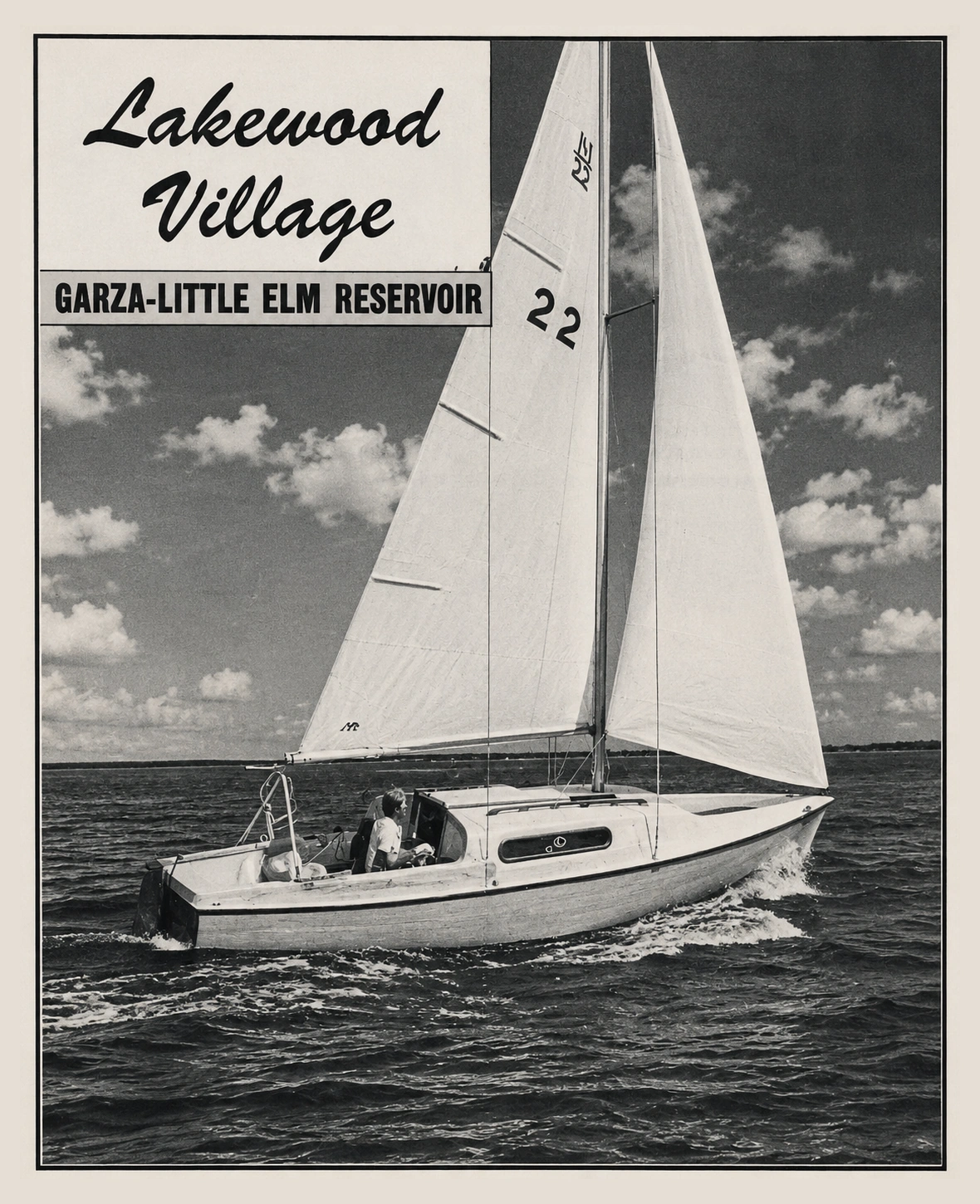
The Dallas Corinthian Yacht Club convinced them to blow a hole in the dam, and that took out the bridge, because they wanted their sailboats to be able to go into the new lake. Lake Dallas was getting shallower, particularly on the north end.
The First Development and a Very Large Snake
Bill Graham
In 1968, I wasn’t working here yet. I was working at the title company. But my brother Frank and my dad got together and started developing it. Section One was developed then.
One of the great stories from that period was that I ran across a python not too far from where the current sewer plant was. That snake was about 24 feet long and about that big around, maybe bigger. He was huge.
I drove up on him from behind and foolishly got out of my car. I started to drive over him, but then I thought he was too big of a log. I was afraid he might wrap around my truck, so I backed out and left. I never saw that snake again.
Chris Farage
Fortunately, we have no more pythons in Lakewood Village.
Bill Graham
I hope not.
The First Homes
Chris Farage
Was there a first home built in town that you have memories attached to?
Bill Graham
Yes. The first home was built on the northwest corner of Shoreline and Lakerest. That home is still there today.
It was built by a man named Bill Windsor and his partner Cecil. Woody Wickers was the man’s name; he was a Braniff pilot. He moved into it in October of 1969, but the financing did not close, so Bill Windsor moved into that house. He was the first person to move in.
I came up here in 1969, right after Thanksgiving.
Chris Farage
So in 1969, you were living here and the first couple of houses had been built. What happened between then and the plans to develop this as a lake community or a golf community? How did that transpire with just a handful of people around, but your family having 400 acres?
A Lake Community Takes Shape
Bill Graham
It was very rural back then. It was all cattle country and cotton fields. In the original Section One, the lots were smaller. What we envisioned originally was for people who wanted a second home and were going to build smaller houses. Prices were very low back then. The lowest-priced lot was about $1,250. You could buy a lakefront lot for less than $10,000 in those days.
People started to come and build second-home properties. That was what we expected. What actually happened was that people started building larger homes than we thought they were going to build. So when we developed Section Two, probably in 1970 or 1971, we expanded the lots from 75-foot lots to 100-foot lots.
Chris Farage
So you were surprised by two things: the size of the homes, and the fact that you expected people to have summer homes or lake houses, but instead they were coming out here to live year-round.
Bill Graham
Yes. When we started selling lots, they were building DFW Airport at the time. We started getting pilots, stewardesses, and people like that among our lot buyers.
Between 1970 and 1972, the builders probably built 20 or 25 homes. Then the gasoline crisis occurred, I believe in 1972, and our business basically shut down. We were too far out. You couldn’t get gasoline to drive from here to the airport or to North Dallas for your job.
Plans for Condominiums, Golf, Tennis, and Airstrips
Chris Farage
Now you’re into the 1970s. We’ve got 25 or so houses built, and the gasoline crisis is upon us. You had to start thinking about a more planned community. Tell us about that.
Bill Graham
The original plan for the property south of the sewer plant was to build condominiums on it. We had the residential single-family housing, then a couple of streets where you could build duplexes or single-family housing, and then the condominiums were going to be in that area.
When we got to Section Three, which I recall was 1972, we decided we needed to make a master plan. We talked about a golf course and a tennis court. My dad was a great pilot, and he wanted a little airstrip. He actually had two airstrips: a north-south runway and an east-west runway. The east-west one was never really used, but the north-south one was. It ran basically from our house down to almost the mayor’s house.
Chris Farage
So because your father, Allen, was a pilot, that led to the decision to have a couple of airstrips.
Bill Graham
Yes. My brother Frank also became a pilot and had a 172. He had a tie-down just outside our house between the house and the runway.
Chris Farage
And the golf course became a reality, right? You told me you played on that golf course.
Bill Graham
It was an under-construction golf course. The fairways were in, the tee boxes were in, and the greens were put in. There was a tennis court, a small putting green, and then our little sales office. That was how it was.
Water, Sewer, and a Forward-Looking Decision
Chris Farage
At this point, homes were going up. You had the beginnings of a golf course and tennis courts. What about utilities? What about the water system and the wastewater plant?
Bill Graham
This was one of the unique things that my dad insisted upon, I guess because he had done a lot of development. We had no wells and no city water, so he drilled wells. The first well was drilled where the current City Hall is, behind it, during the development of Section One.
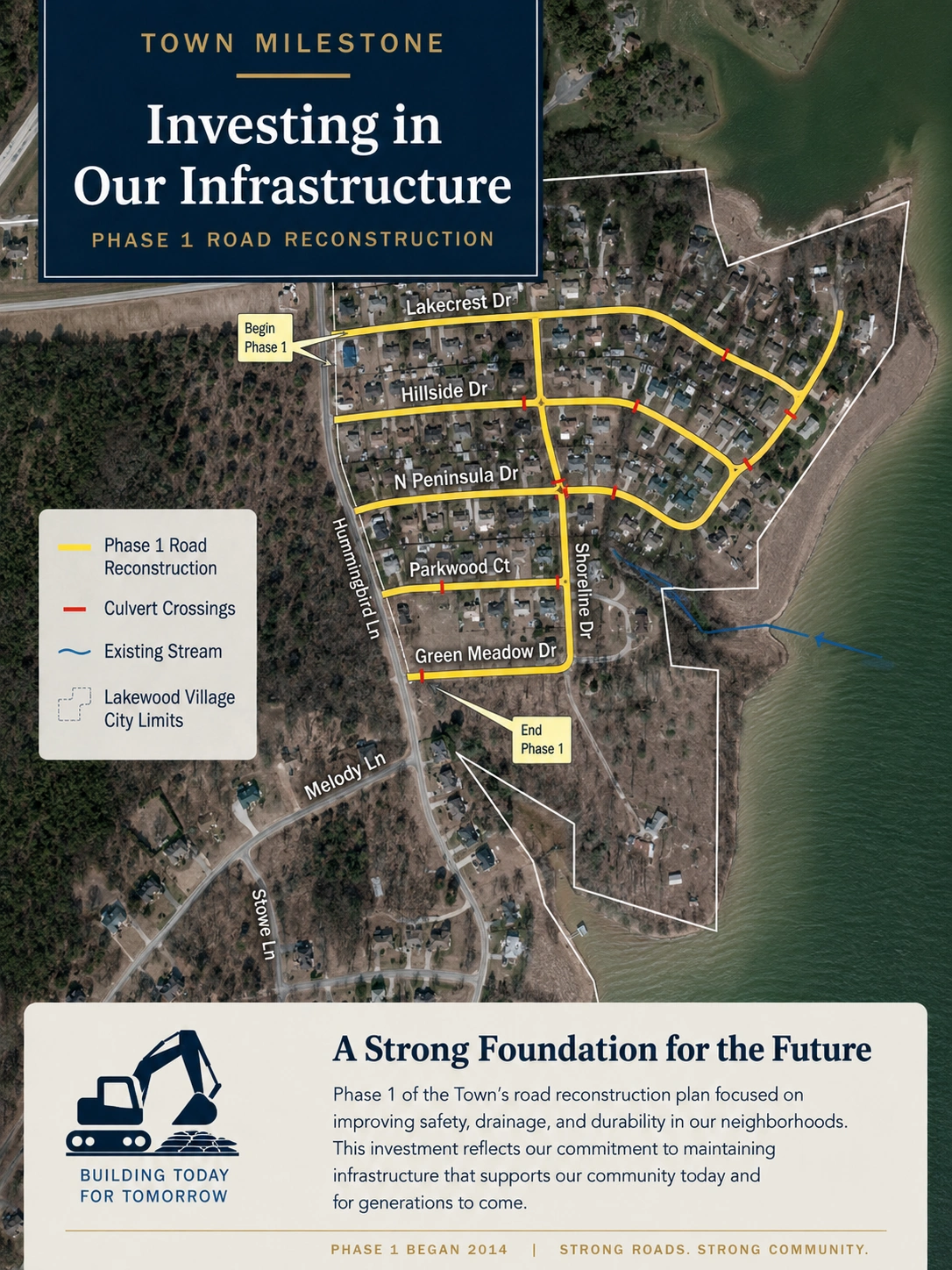
We put in the streets and paving, put in the well, and put in the sewer plant. That was really unique because nobody up here had their own sewer plant. My brother Frank went down to Texas A&M, got his water and sewer licenses, and became the water and sewer guy.
Chris Farage
People don’t think much about wastewater plants or sewer plants, but that decision itself was a big strategic decision for our town. You said it was very unique.
Bill Graham
Yes, it was before Little Elm had one. It was before The Colony had one, particularly privately owned. Back in 1968, Frank and my dad created Lakewood Village Utilities Company, which operated the water and sewer company and sold water and sewer services to our growing metropolitan development of about seven houses at the time.
When I came up here, we created the land development company. Travis Oil Company sold the remaining lots they had not sold yet to Lakewood Village Development Company, and I was president of Lakewood Village Development Company.
Later, in the early 1970s, Frank left and went to work for a municipal utility district down at The Colony, and I became basically everything up there. It perked along. We would sell a few lots, and several houses would be built, but it was not explosive growth.
Choosing Independence
Bill Graham
Then, about 1975 or 1976, the town of Little Elm wanted to expand, and they met with Frank and me about annexing us. The main reason they wanted to annex us was for the tax revenue Lakewood Village would provide to Little Elm. Little Elm did not provide many services. They didn’t have water and sewer and that sort of thing, so we were more advanced than they were at the time.
Chris Farage
So you decided to stay independent.
Bill Graham
We had tried to organize a homeowners association a couple of times with a few people here. It was growing by then. We probably had maybe 40 houses and at least 200 people.
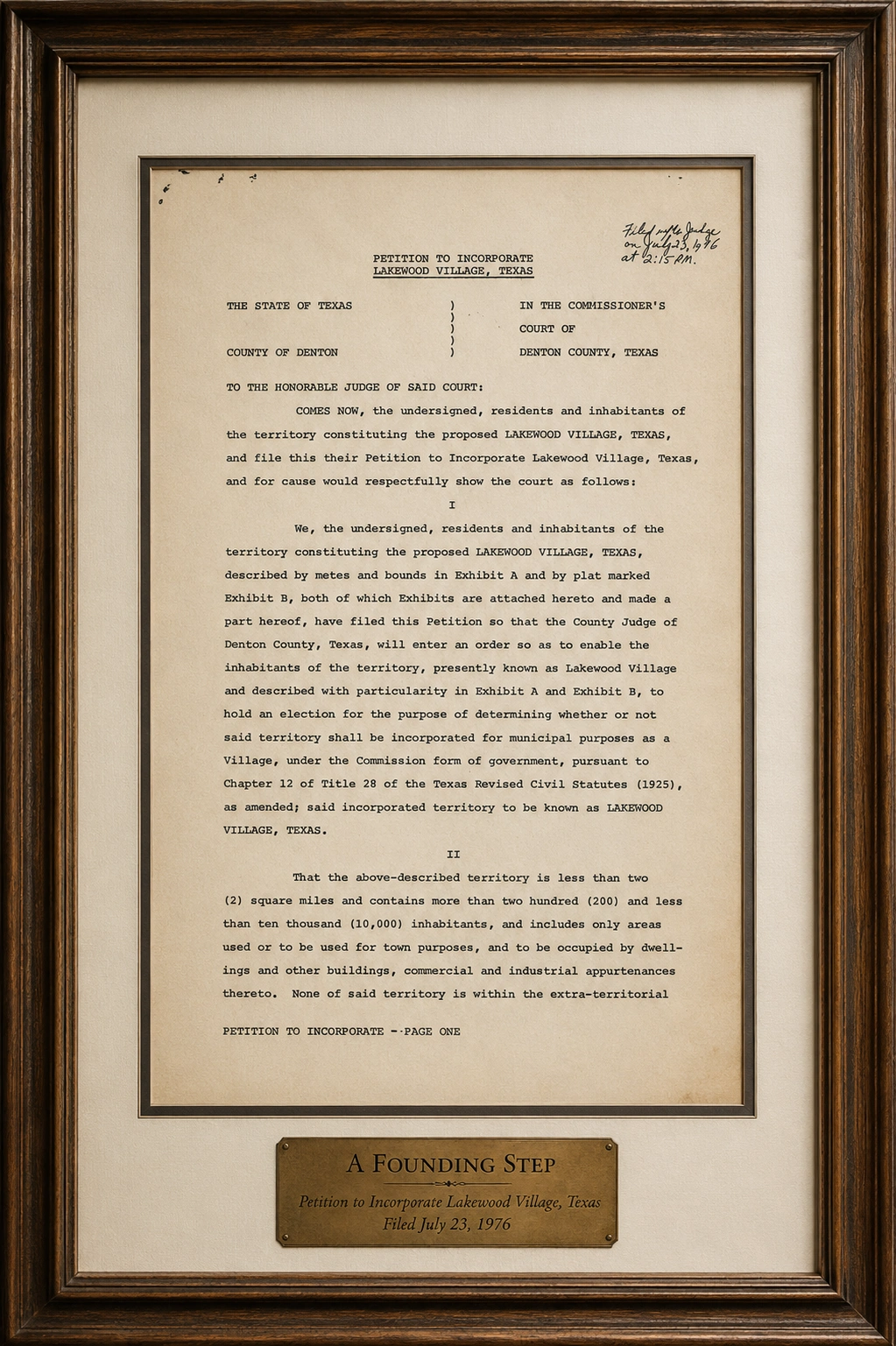
You had to have 200 people to organize a town in the state of Texas. So we got a petition, I went to the county commissioners, we held an election, and we voted to create the Town of Lakewood Village.
Chris Farage
What a great story. To me, it strikes me how forward-thinking and courageous it was at the time for you and the residents to do that. The mayor showed me a document of that vote, and it was close. It was in favor of remaining independent by a 15-vote difference.
Bill Graham
Well, that was a landslide.
Chris Farage
That showed courage and foresight. You should be congratulated for that.
Bill Graham
Thank you.
Incorporation and the First Council
Chris Farage
Those were the articles of incorporation that created Lakewood Village. Now you had 200 or 300 people, 40 homes, a sewer plant, a water plant, and plans for expansion.
Bill Graham
The original town was basically created so there would be no taxes at all. To get revenue for the town, you could have franchise taxes from the telephone company, the co-op, and Lakewood Village Utilities Company. We used to pay the city franchise tax, but you had to own the streets to collect franchise taxes. So we deeded the streets to the city, and the city took over maintenance of the streets.
Chris Farage
Where did the money come from for the water well and sewer plant?
Bill Graham
It was privately owned.
Chris Farage
You invested on your own in the future of the town.
Bill Graham
Yes. We owned the utility company and the streets up until the city was formed.
Chris Farage
Bill, I’m holding a couple of historic documents of the Town of Lakewood Village. The first is something you spoke about already: the election to incorporate the town, which happened on April 2, 1977. The vote for incorporation was 52 votes for and 37 against, so that was the 15-vote affirmative majority. Interestingly, there was one unmarked vote, so even back in 1977, we had bad ballots.
I’m also holding the minutes of the first council meeting of the City of Lakewood Village, which occurred on September 6, 1977. Our mayor back then was Corey Dandridge.
Bill Graham
Corky.
Chris Farage
Corky Dandridge. And the five council members were William A. Graham, Tyrus Kirk, Ruben Troy Edwards, Betty Cheney, and Roland Felmouth.
Bill Graham
The election was held in August, I think.
Chris Farage
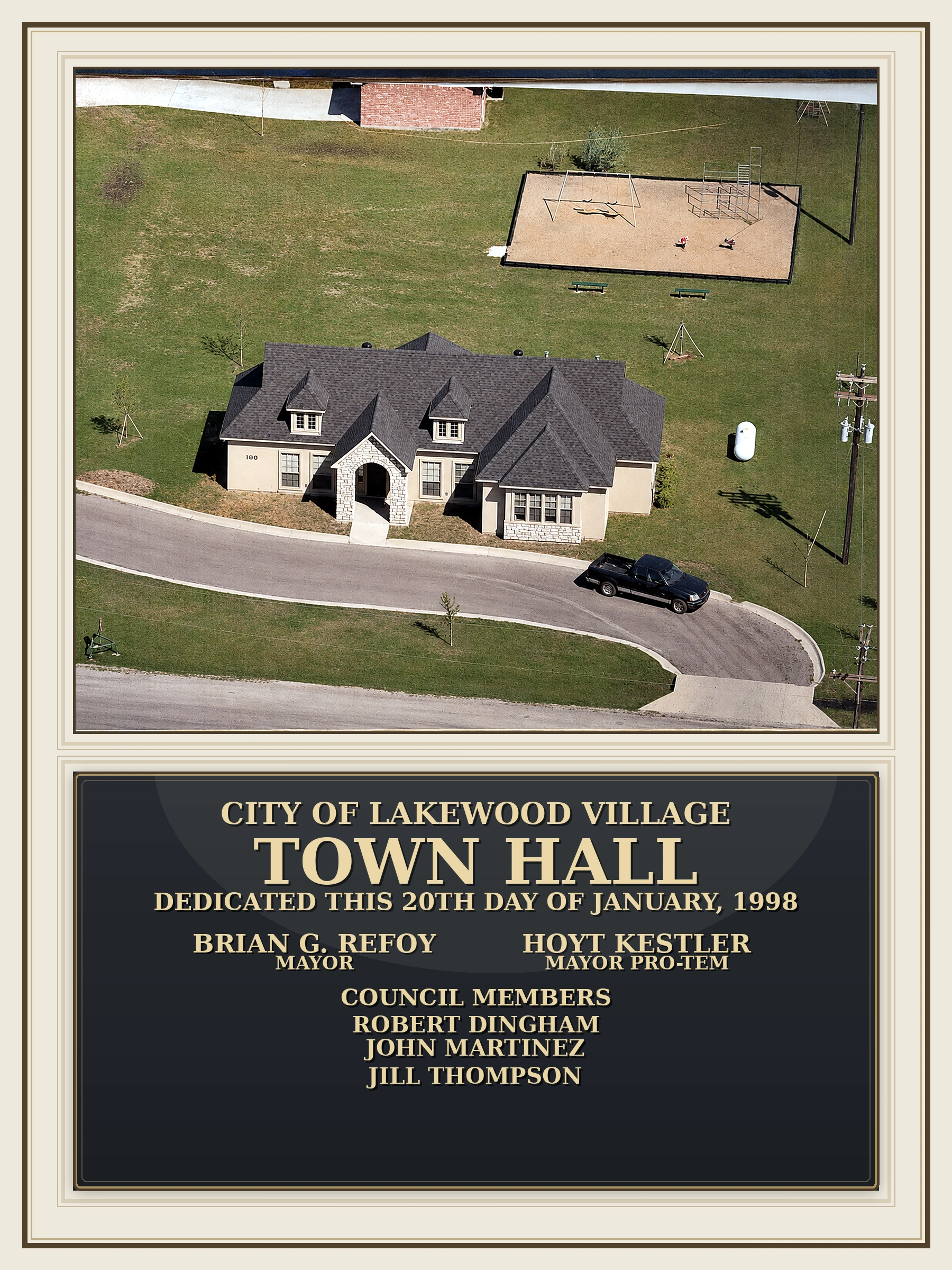
That makes sense. The election was held in August, and the first meeting was in September. Back then, you had no town center and no City Hall. I assume your meetings were around kitchen tables or in family rooms. Tell us about that time.
Bill Graham
The election was held at our little sales office, and the council elections were held there as well. The first meeting, I believe, was at Roland Felmouth’s house. I won’t swear to that, but that is whose house I think it was.
Corky Dandridge ran for mayor, and the other five ran for council positions. They were the founding fathers and mothers of the Town of Lakewood Village.
Funding the Town Without Property Taxes
Chris Farage
Tell us a little bit about what that time was like. You had utilities that were still owned by your family’s business.
Bill Graham
The Lakewood Village Utilities Company continued to own the water and sewer businesses. We still owned the streets at the time the town was incorporated, and the town needed money.
To gain franchise fees that the city charged to those who provided utilities to the city — the phone company, AT&T, Denton County Co-op, which became CoServ, and Lakewood Village Utilities Company — we started paying taxes to the city for our water and sewer plants and that sort of thing.
There were no property taxes. One of the reasons for founding the town was so there would be no taxes. The city needed title to the streets to collect franchise fees, so we deeded the streets to the city. Maintenance continued to be done by Lakewood Village Development Company, the land development company that organized the platting and sale of lots. The utility company provided water and sewer services.
Growth Around Lakewood Village
Bill Graham
By the end of 1983 and into 1984, the area was beginning to really develop around us. The City of Dallas had grown out this far, so other developers were looking for land and good property to buy.
Between 1977 and 1984, we had an opportunity to sell to a developer who had developed property over on Lake Ray Hubbard. He wanted to have inexpensive housing, even mobile homes and that sort of thing. But we insisted that he develop it with brick houses and single-family housing.
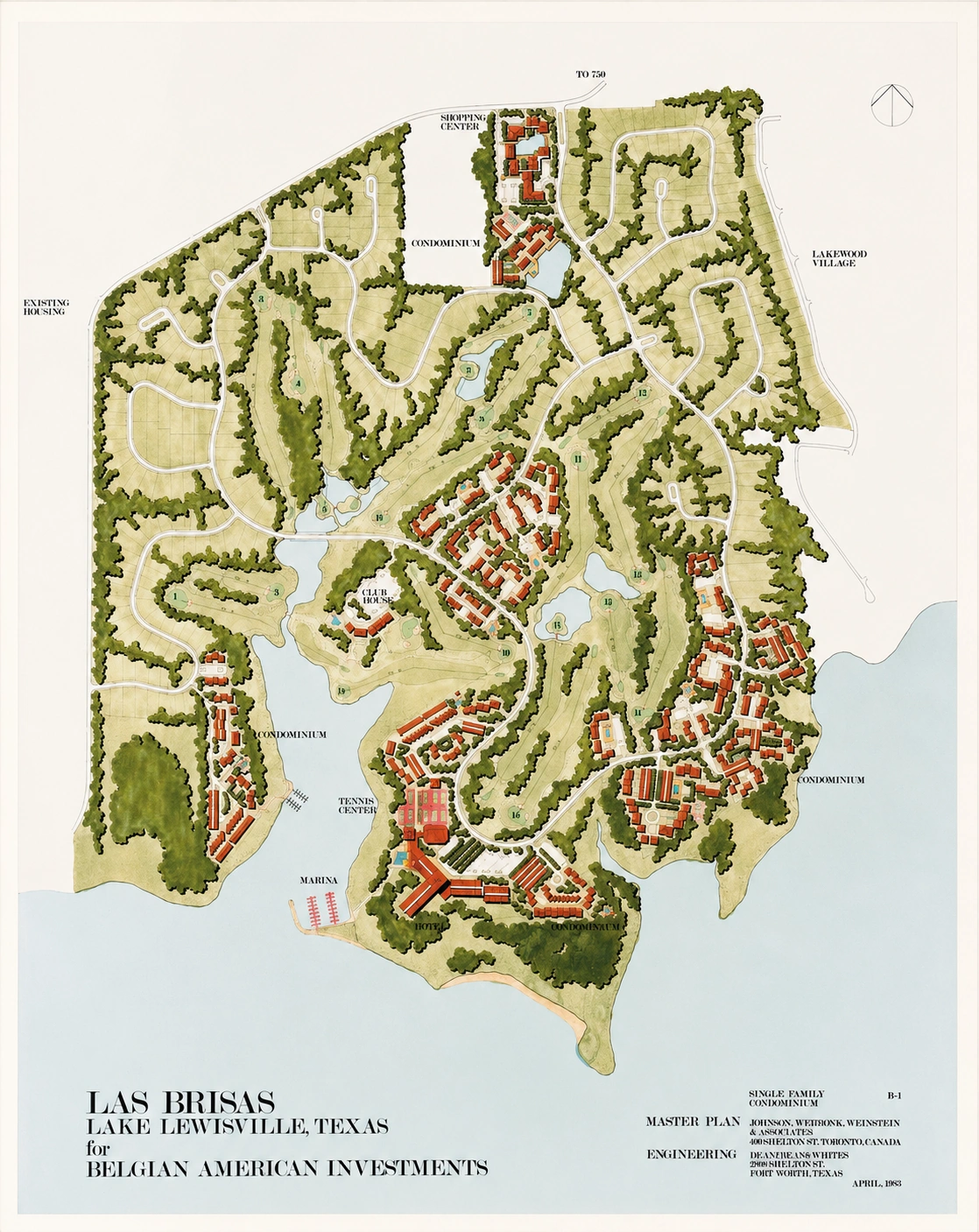
We were doing that to protect the people we had sold land to. In 1984, we had seven different groups wanting to buy property. Everything is for sale at the right price, so we put a very high price on the property. Belgian American Investment Company not only agreed to our price, but agreed to pay all cash.
We sold the raw land, but we did not sell the developed lots or the water and sewer plant. It was a lot of money at the time, well over what we considered market price back then.
Chris Farage
This was the Belgian American Investment Company, presumably headquartered overseas in Europe. From a distance, they held a big portion of what was then Lakewood Village, and they maintained that without developing it.
I also want to ask about the utilities. The sewer plant and water plant were such a big part of our founding. Your family still owned the water system and sewer system at that point, and the Town of Lakewood Village did not yet own them.
The Utility Company and the Town
Bill Graham
The utility company was always subsidized by the development company. The expenses were greater than the revenue.
Before the city existed, we agreed to use City of Dallas rates. We couldn’t just raise rates however we wanted. But then when the city was formed, the city decided it wanted to set our water rates, and they basically would not give us enough money to operate the company even at the break-even point.
They wanted the development company to continue subsidizing the rates, but they also wanted additional services. They wanted a larger water main from the water tower to the mains. We put in large mains so that fire hydrants could be installed. Every fire hydrant we put in was on at least a six-inch main, and at that point, the town needed them.
The city would not give us enough money to do what they insisted we do. They just kept wanting the development company to subsidize the utility company. I told them we could not afford to do all these things unless they increased our rates, and they wouldn’t do it. So I said, “Okay, we’ll just run the utility company through bankruptcy.” They did not like that idea either.
Chris Farage
So that began the negotiation with the city to purchase the utility company.
Looking Back
Chris Farage
Bill, I have just a couple more questions. I want to fast-forward to today. After being an active member of the founding family of the town, when you look back on Lakewood Village and what you see here today, with the development that is now explosive around us, what do you think? How do you feel about what your family did all those years ago?
Bill Graham
I’m proud of a lot of things my family has done up here, particularly in the early days: the forward-looking things we were doing, the paving of the streets, and putting in the water and sewer system.
I’m quite proud of the town and the way it was developed, and how the various mayors and people used the city to protect the people here. I’m proud to take responsibility for what we did and how we began it. I’m proud of what it has become.
Chris Farage
Bill, to close, it’s clear to me that the story of your family is a great American story. A family set a vision, invested in it, kept your family active and employed, and created a vision for a community that affects generations of people.
I think you and your family can look back with pride and thankfulness that you were able to accomplish something great and be part of something great — something that will live on forever. Thank you for that.
Bill Graham
Okay. Thank you.
Additional Stories
class="speaker">Bill Graham
In 1957, they blew a hole in the old Lake Dallas dam, which took out the road that Garza Lane was on. You had no way to get to Lewisville except to go around the lake.
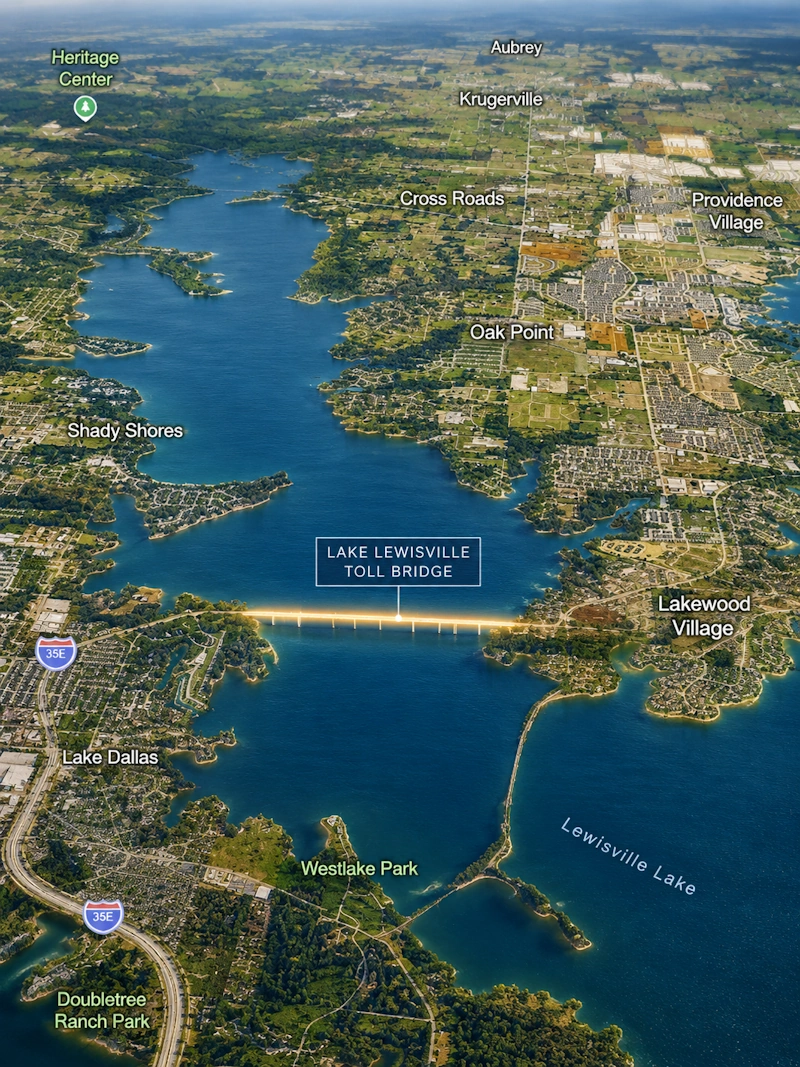
My dad had a couple of solutions for them. One was a toll bridge, but at the time, the toll road authority did not think there would be enough traffic to justify building the bridge. As an alternative, my dad started investigating a ferry service. He went down and found some ferry barges out on the Gulf Coast. He was going to bring them up here, build a dock on this side and another on the Lewisville side, and run a ferry across to take people and automobiles.
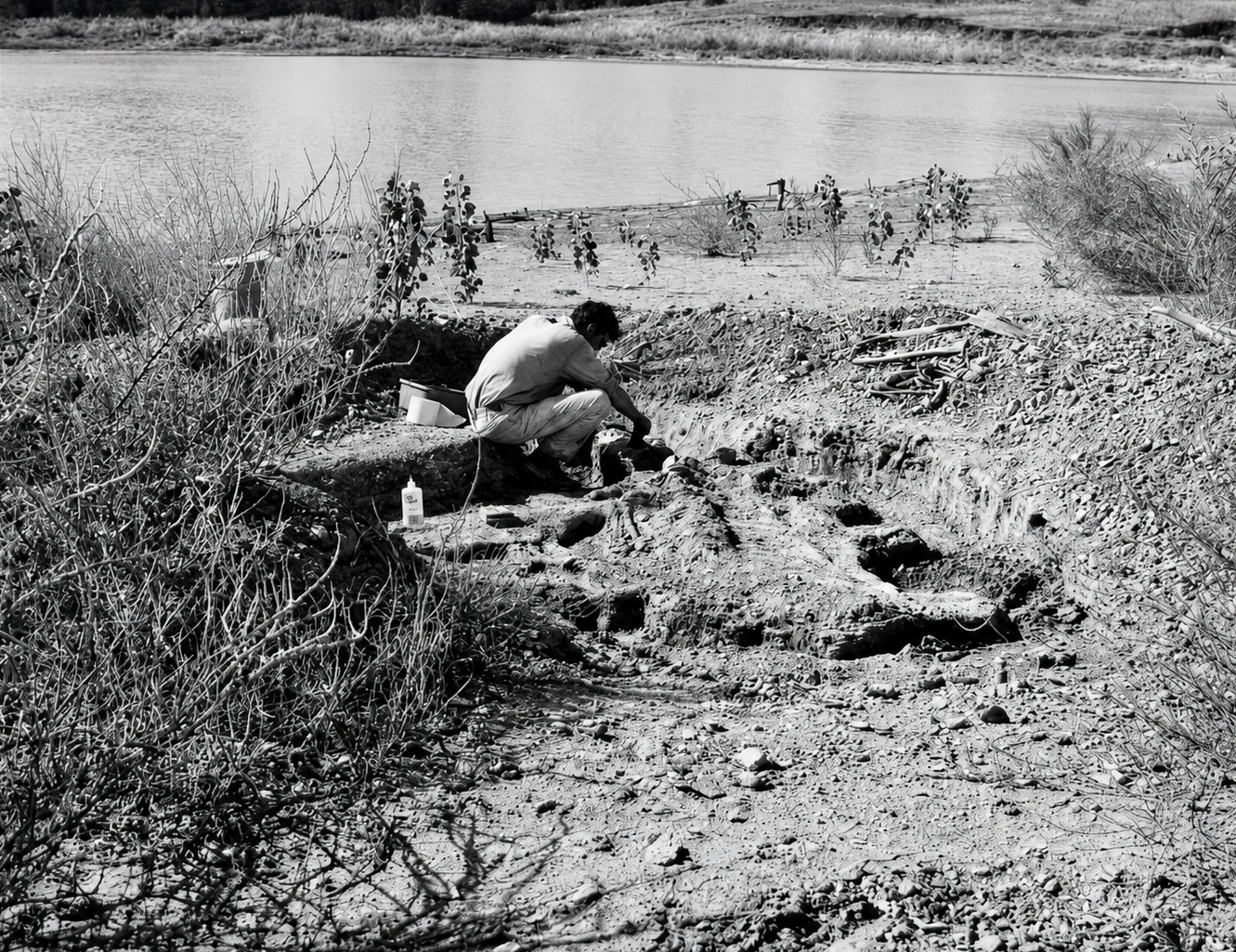
When I first moved up here in 1968, somebody found a plesiosaur just outside our window. It was an aquatic dinosaur. A fossil had washed ashore and gotten buried. The whole plesiosaur was there except for the head and one flipper.
The University of Texas came up here, and I would drive down and watch them as they unearthed it, put plaster over it, and took the bones out. I understand they are down at the University of Texas in Austin.
A lot of people used to go around and find shark teeth in this area around the lake. Many millions of years ago, this area was connected to the ocean, when the ocean was up here.
Chris Farage
On behalf of the mayor, Linda, and the residents of the town, I want to thank you. It’s really a great thing you did for us. This is going to be nice.